
State Pride in Chess and Pawn Chains
In Openings for Amateurs: Theory vs. Practice (Mongoose Press, 2024), Pete Tamburro’s annotations on one game included negative remarks about a Nebraskan’s chess moves. My state pride took offense! More 🡢
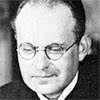 Aaron Nimzowitsch (1886-1935) was a Russian-Danish chess Grandmaster and chess writer. He was born in Riga, as Latvia was then part of the Russian Empire. He’s considered one of the most important chess players and his influence is still felt today.
He wrote a book on chess theory called My System. In 1929, he published Chess Praxis in Germany. A pre-teen Tigran Petrosian bought the book and it influenced the future World Champion.
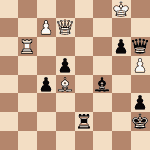
Germany, Hamburg,1910. The city of Hamburg hosted one of most interesting chess game between Frederick Yates and Aaron Nimzowitsch.
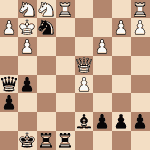
Try to solve online this chess puzzle: Karl Gilg vs Aaron Nimzowitsch during Semmering tournament, 1926. Black wins in 3.