Grandmaster Jan Timman, who was #2 in the world at his competitive chess peak, died on February 18, 2026. His last book, which was published November 21, 2025, by New In Chess, is Timman’s Studies: My Collected Endgame Studies and Their Origins. Fittingly, it is the final book in an acclaimed trilogy.
Book of the Year
According to the publisher’s website:
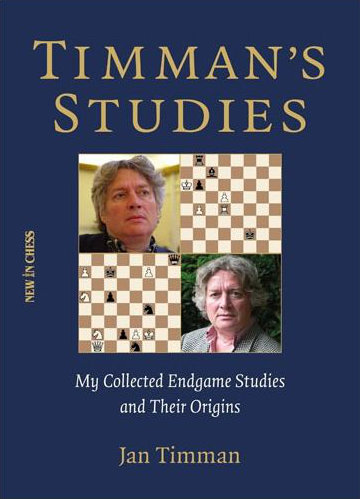
New in Chess:
Jan Timman completes an impressive and fascinating trilogy with his collected studies. In Timman’s Titans, winner of the 2017 ECF Book of the Year Award, he writes about the world champions he admires. In Timman’s Triumphs, he annotates his hundred best games. In Timman’s Studies, he offers his collected compositions of endgame studies.
Timman’s Studies: My Collected Endgame Studies and Their Origins is likely to win book of the year for 2025. The studies’ origin stories and the glimpses of Timman’s colleagues are fascinating.
Origins usually fall into one of the following categories. First, studies were sometimes created to satisfy tournament themes such as “systematic manoeuvre.” There are tournaments for study composers, where judges determine the winners. Timman often quotes judges’ opinions of his work. Second, he improved his own past studies. One way was making them more “economical,” by using fewer pieces. Third, he revised the studies of others. Fourth, tournament games—played by titled players of yesteryear and the present—inspired several of his studies.
Timman also tells who he showed studies to and what those chess stars, such as GM Viktor Korchnoi and GM Eugene Torre, thought of his studies. My favorite anecdote was Timman and his friend IM Hans Böhm discussing “an endgame-theoretical curiosity” while swimming laps at the Zuiderbad pool in Amsterdam.

Beauty 1–Solving 0
I tried solving a few studies and failed. Suspecting that I would never get the right answers, I stopped trying. Instead, I played through Timman’s answers and appreciated their beauty. Some chess knowledge is necessary, as he often finishes a study with a position that would challenge a beginner.
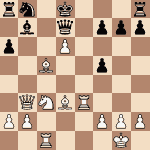
The Zuiderbad Pool study ends with a White king on c8, White pawn on c6, Black king on f3, and Black queen on d1, with Black to move. About that position, Timman states, “Draw; the black queen’s path to g4 is cut off.”
A beginner might wonder why this is a draw, as White doesn’t yet have a queen. Timman’s explanation about Black’s queen being unable to give check on g4 means that White’s next move is c-pawn to the seventh rank.
Here is a video that shows, starting at 8 minutes and 39 seconds, a seventh-rank pawn on a bishop’s file (c- or f-file) and king versus a king and queen. (A black pawn on the second rank is the same as a white pawn on the seventh rank. Both are one square from promoting.) Other parts of the video discuss what happens when the seventh-rank pawn is on a different file.
To see the seven-move-long answer of Study 4, along with several variations, look in the sample PDF available at the publisher’s website. The publisher should have given a rating range for Timman’s last book, such as, “Suitable for players rated X or higher,” where X is a particular chess rating. Since I failed to solve even one study, I am not sure what X would be. However, as noted, I still enjoyed the book.