Max Walter vs. Emanuel Lasker
This position occurred during Max Walter vs Emanuel Lasker, 1923.
Black to move and win in 3.
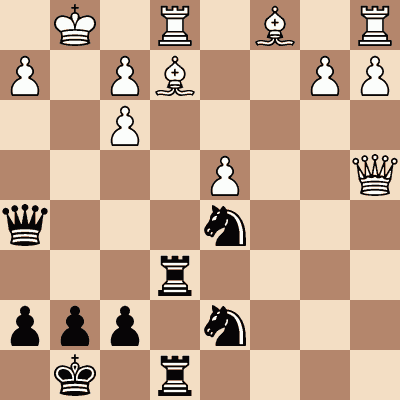
Roll over to see the solution: 1... Rg6+ 2. Kh1 Qxf3+ 3. Bxf3 Rxe1#
FEN: 4r1k1/3n1ppp/4r3/3n3q/Q2P4/5P2/PP2BP1P/R1B1R1K1 b - - 0 1
About the players
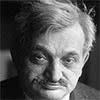 Emanuel Lasker (1868-1941) was a German chess player and World Chess Champion for almost 30 years. He was also a mathematician and philosopher and one of the strongest chess players of all time.
Max Walter was a Slovak chess master born in Pressburg, Austria-Hungary. He started his chess career in Czechoslovakia after World War I.
He won the Czechoslovak Chess Championship at Pardubice in 1923. Walter also took first place at Budapest 1926, finishing ahead of Balázs Sárközy. Other results included a shared second place behind Réti at Kolin 1925 and second place behind Endre Steiner at Piešťany 1922. He tied for 6th and 7th at both Györ 1924 and Bratislava 1925. He finished 14th at Ostrava 1923 and tied for 10th and 11th at Bardejov 1926. He also tied for 7th through 9th at Trenčianske Teplice 1926 and took second place at České Buděj.
Re6-g6+
Be1-g5 Qh5xg5+
Kg1-h1 Qg5-g2#
2. … qf3+
The analysis is:
1…Rg3+
2. Kh1 (if 2. Kf1, then 2…Qh3#)
2…Qxf3+! (the key move)
3. Bxf3 (forced) Rxe1#
The combination is based on the “weak last rank” theme. Due to the presence of White’s Bc1, the Rooks are not “connected”, thus Re1 is vulnerable. Re1 also is the target of the connected Black’s Rooks on e-file, the only piece that prevents White’s Rooks to enter into the “weak last rank” is the Be2. Also, the pawn skeleton on White’s kingside is “open”, leaving the King exposed to direct checks.
Last but not least, since it’s Black to play, means that he has the “initiative”.
Note that White is up three pawns in material, but his position is lost. The (always spectacular) Queen sacrifice on f3 is the move that “removes the defender” Be2 and allows the final blow on the “last rank”.
Nice combination!
To complete the picture, the analysis is:
1) Rg6+ (not Rg3, as I typed erroneously previously).
A) 2. 2. Kh1 (if 2. Kf1, then 2…Qh3#)
2…Qxf3+! (the key move)
3. Bxf3 (forced) Rxe1#
B) 2. Bg5 Qxg5+
3. Kh1 (or Kf1) Qg2#
B, as stated by Carlos, also.
the answer is:
Re6-g6+
Bc1-g5 Qh5xg5+
Kg1-h1 Qg5-g2#
Re6-g6+
2. Bc1-g5 Qh5xg5+
3. Kg1-h1 Qg5-g2#
1. ———, Re6-g6+
2. Bc1-g5, Qh5xg5+
3. Kg1-f1, Qg5-g2#